Thursday, 9 June 2016

Irangi Forest Birding

Irangi Forest is nestled on the eastern side of the Mount Kenya zone which is the largest forest remaining in Kenya. It’s an ecosystem as a whole that plays a critical role in the water catchment for two main rivers in the country, the Tana and Ewaso Nyiro. Irangi Forest is an Important Bird Area (IBA) with rich biological diversity, not only in terms of ecosystems but also in terms of species. The area also has a wide variety of fauna with major species of large mammals of international conservation interest, including elephant, leopard, giant forest hog, mountain bongo and black-fronted duiker, species of ungulates
Mt Kenya summit

Fact File Irangi Forest

Size: 18,500 Hectares
Location: Embu Country
Altitude: 2000m
Drive time: 3 hours from Nairobi
                                                     Gate to Irangi forest
Attractions
Scenery is Amazing
Rupingazi Waterfall
Mount Kenya Peaks can be seen clearly from Irangi campsite early morning
The forest has 29 permanent rivers
Have some of the known oldest trees (Camphor trees presumed to be over 300 years old)
Forest Birdlife prolific
Camphor Tree
 Birds Checklist

Mountain Buzzard, Green Ibis,
Hamerkop, Eurasian Hobby, African Goshawk, Little Sparrow Hawk, Great Sparrow, Augur Buzzard, Booted Eagle, Ayres’s Hawk Eagle, Crowned Eagle, Dusky Nightjar,
Fine banded Woodpecker
Olive Pigeon, Lemon Dove, Red-eyed Dove, Tambourine Dove, Hartlaub’s Turaco, African Emerald Cuckoo, African Wood Owl, Little & White-rumped Swifts, Bar-tailed Trogon, Cinnamon chested Bee-eater, Silvery cheeked Hornbill
Immature African Harrier Hawk
 Moustached& Yellow-rumped Tinkerbirds, White-eared Barbet, Fine banded Woodpecker, Black-fronted Bushshrike, Lesser Honeyguide, Grey cuckoo Shrike, Kenrick’s,
Grey Cuckoo Shrike
Sharpe & Abbott’s Starlings, Chestnut &Grey throated Apalises,  Yellow whiskered, Slender-billed,& Cabanis’s Greenbuls, Cinnamon Bracken Warbler, Brown Woodland Warbler, Abyssinian ground Thrush, Thick-billed Seed-eater.
Accommodation Options:

Camping near the Kenya Forest service quarters the grounds are fine, there are bathrooms but no hot showers 
Alternatively Embu town Izaak Walton inn is a suitable hotel 30km from the forest

Monday, 6 June 2016

Cycads "Living fossil"

The Cycads are primitive woody plants which flourished over 200 million years ago,Among the oldest plants still living on the planet sometimes called the living fossils now widely scattered throughout the world.mostly in dry areas.Growing extremely slowly some are  hundred of years old,considered,There are five indigenous Encephalartos in Kenya but only Encephalartos hildebrandtii is common,widely distributed along the Kenya coastal forests.The rest are inland,restricted to drier areas
Leaves are compound to 2.5m long,in whorls from stem:about 80 pairs of leaflets stiff and tough,often with spiny teeth at the tip and 1 -9 along each margin and parallel veins
Cones ripen brown and are pollinated by insects probably  flying beetles,seeds have a soft outer layer,the inner nut to 3cm long
The hard seed is boiled and ground to flour by  the Boni people in Lamu ,during famine season,the starchy stem centre can be chopped,fermented then dried to make uji porridge or ugali,seeds and suckerd may be used for propagation


Friday, 3 June 2016

African Premier Adventures Ltd

  The North Sea is a marginal sea of the Atlantic Ocean located between Great
BritainScandinaviaGermany, the Netherlands,
Belgium
, and France. It connects to the ocean through the English
Channel
 in the south and the Norwegian
Sea
 in the north. It is more than 970 kilometres
(600 mi) long and 580 kilometres (360 miles) wide, with an area of
around 570,000 square kilometres (220,000 sq miles)

Thursday, 26 May 2016

Birding with Nature Kenya (EANHS)

Nature Kenya is the Africa's oldest environment society,established in 1909 to promote the study and conservation of Nature in Eastern Africa,Nature Kenya organizes Bird walks every Wednesday and third Sunday of every month,meeting point is at Nairobi National Museum near the Fisheries,transport is normally shared and different sites are visited within Nairobi and its outskirts,The walk are for  the Organization's members but temporary day membership is available for Non members,meeting time 8:30 am and leave by 9,the walks on Wednesday goes upto to noon,But for Sunday outing it's a whole day exercise
 you can visit their website for more details http://www.naturekenya.org/
Yesterday bird walk was around the Michuki garden which adjacent to the Nairobi National Museum,the group which mainly consisted of students doing  tourism related courses, was led by Fleur Ng'weno (who have done these for more than 40 years and still counting),they braved the morning cold which is being witnessed here in Nairobi for the last few days
African black Duck in Nairobi River
A total of 52 Bird species were recorded 

Wednesday, 6 April 2016

Birding in Uhuru Gardens

Ten minutes drive from the City Centre on Langata road, Uhuru gardens is the largest memorial park.

It was declared a National monument back in the year 1966,It was where Kenyan flag was first raised  during independence on 12th Dec 1963


The park has over 100 recorded bird species both residents and also migratory ones,due to its close proximity  to Nairobi National Park,there are a lot of interesting birds,

Wire tailed Swallow collecting  mud for nest building
Red tailed Shrike-a migrant bird preparing for the journey back to Europe and Asia


Wasp's nest

The park offers a perfect weekend get away to families living adjacently,also school from up country have to include the garden's in their program.
Professional athletes frequent Uhuru gardens to do their daily jogging


Tuesday, 29 March 2016

Fishing Lodge Aberdares National Park

These two cabins are nestled inside Aberdare National Park,three hours drive from Nairobi through the Kinangop plateau, they provide a secluded haven for trout fishing, walking safaris, hiking and a chance to see spectacular Karuru waterfalls, moorland scenery and diverse wildlife including buffaloes, elephants, genets, leopard, bushbuck, reedbuck, and several bird species including East African endemic Jackson's Francolin,Aberdares Cisticola,Mountain Buzzard,Alpine Chat
Each of the two identical lodges has three rooms, two doubles and a single, and two bathrooms. There is a small kitchen with a gas burner and a lounge with a great fireplace and a terrace with a wonderful view. There is running water, which is heated by a wood burner (lit by the caretaker) in the early morning and in the evening. There is no electricity, lighting is by paraffin lamp (supplied). Bring warm clothes - its close to the Equator but is still at 3000 metres (9800 feet) altitude.

                       From the Lodge, you can hike to Karuru Falls
                                                   Karuru Falls
                                      Waterfall viewing tower

Thursday, 4 February 2016

Day Birding in Nairobi National Park

Nairobi National Park is the oldest Park in Kenya over 60 years old and only 10km from the Capital City, with a size of 117 kilometers squared, 1500 to 1700 meters above  sea level, The  habitats are  as follows;( a)Acacia dominated woodland, Riverine& Scrub ,(b)Dams, Rivers and Wetlands,(c) Evergreen Forest (d)Gorges (e)Open Grasslands, 
Secretary Bird
More than 500 Bird species have been recorded in the park, Nairobi National Park has many different Habitats, and each habitat contains various species of Birds

African Darter
Montane Nightjar
Superb Starling
Nairobi National Park  has four of the Big Five, Also the Herbivores have their own migration to plains adjacent to the Park, the Athi Kapiti plans, Swara Plains formerly Hopcraft Ranch
Lion
Wildebeest/Gnu

The Park  gates open at 6:30 in the Morning, and the roads inside the park are well-signposted and motorable throughout the year, 


Friday, 22 January 2016

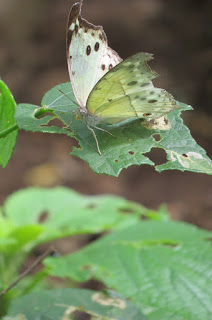
Forest Mother of Pearl

Salamis parhassus-50mm
Among Africa's loveliest and most memorable butterflies,these large insects have a wingspan of 80-95mm.The upper sides of the wings are a shining greenish-white,with oily violet reflections.The undersides are more muted
At rest,clinging to underside of foliage in the shade,they look like leaves
Habits &Habitat:Fairly common in forest and woodland habitats,
Can be very abundant seasonally,they fly with a sailing motion,often noticed in flight on sunny days,when their moving wings provide bursts of colour,
They frequently settle on the ground to mud -puddle.

Monday, 18 January 2016

Common Teal Sightings in Thika Sewage Treatment Ponds

Yesterday 17th January 2016 during the Water Bird counts organized by National Museums of Kenya,Ornithology Department and other lead agencies, we spotted  Common Teal(green-winged Teal) in one of the ponds,a small dabbling duck little larger than a Hottentot Teal,with a rather steep forehead and a short bill,


Male in breeding plumage has chestnut head with a buff -boarded iridescent green band from lores to nape:body greyish with white horizontal line along side and a creamy under tail coverts noticeable at a distance 
Habits- singles or small groups associate with other waterfowl,they feed waterside vegetation.Regular paleartic migrant in small numbers November to March mainly above 1400m on small ponds,streams and lakeshores in and west of Rift valley, including Lake Turkana
Together with Yellow-billed Ducks
In the exercise other water birds were also seen and recorded

   
White faced whistling Duck
Sacred Ibis
Photos credit  @Mwangi wa Gitau

Monday, 11 January 2016

Oryx Antelope Facts

The elegant Oryx belongs to the group one of the uncommon mammals on earth. The Oryx is so much adapted to the arid and harshly hot landscape that its ability to go on without water for a prolonged period can only be rivaled by that of the camel. Oryx is among the four antelope species of the genus Oryx. Out of the four Oryx species, three can be found in the arid regions of Africa and the fourth species is a resident of the Arabian Peninsula. Oryx has amazing long spiky horns with a neck and mane resembling that of a horse. They have a very supple muscular body structure with distinct black outlines against the white face. Their long horns are almost straight dark markings on the legs During the ritualistic display of dominance, these antelopes show their distinctive features to exhibit their long ringed horns that can reach up to 1500 mm in length.