Wednesday, 6 April 2016

Birding in Uhuru Gardens

Ten minutes drive from the City Centre on Langata road, Uhuru gardens is the largest memorial park.

It was declared a National monument back in the year 1966,It was where Kenyan flag was first raised  during independence on 12th Dec 1963


The park has over 100 recorded bird species both residents and also migratory ones,due to its close proximity  to Nairobi National Park,there are a lot of interesting birds,

Wire tailed Swallow collecting  mud for nest building
Red tailed Shrike-a migrant bird preparing for the journey back to Europe and Asia


Wasp's nest

The park offers a perfect weekend get away to families living adjacently,also school from up country have to include the garden's in their program.
Professional athletes frequent Uhuru gardens to do their daily jogging


Tuesday, 29 March 2016

Fishing Lodge Aberdares National Park

These two cabins are nestled inside Aberdare National Park,three hours drive from Nairobi through the Kinangop plateau, they provide a secluded haven for trout fishing, walking safaris, hiking and a chance to see spectacular Karuru waterfalls, moorland scenery and diverse wildlife including buffaloes, elephants, genets, leopard, bushbuck, reedbuck, and several bird species including East African endemic Jackson's Francolin,Aberdares Cisticola,Mountain Buzzard,Alpine Chat
Each of the two identical lodges has three rooms, two doubles and a single, and two bathrooms. There is a small kitchen with a gas burner and a lounge with a great fireplace and a terrace with a wonderful view. There is running water, which is heated by a wood burner (lit by the caretaker) in the early morning and in the evening. There is no electricity, lighting is by paraffin lamp (supplied). Bring warm clothes - its close to the Equator but is still at 3000 metres (9800 feet) altitude.

                       From the Lodge, you can hike to Karuru Falls
                                                   Karuru Falls
                                      Waterfall viewing tower

Thursday, 4 February 2016

Day Birding in Nairobi National Park

Nairobi National Park is the oldest Park in Kenya over 60 years old and only 10km from the Capital City, with a size of 117 kilometers squared, 1500 to 1700 meters above  sea level, The  habitats are  as follows;( a)Acacia dominated woodland, Riverine& Scrub ,(b)Dams, Rivers and Wetlands,(c) Evergreen Forest (d)Gorges (e)Open Grasslands, 
Secretary Bird
More than 500 Bird species have been recorded in the park, Nairobi National Park has many different Habitats, and each habitat contains various species of Birds

African Darter
Montane Nightjar
Superb Starling
Nairobi National Park  has four of the Big Five, Also the Herbivores have their own migration to plains adjacent to the Park, the Athi Kapiti plans, Swara Plains formerly Hopcraft Ranch
Lion
Wildebeest/Gnu

The Park  gates open at 6:30 in the Morning, and the roads inside the park are well-signposted and motorable throughout the year, 


Friday, 22 January 2016

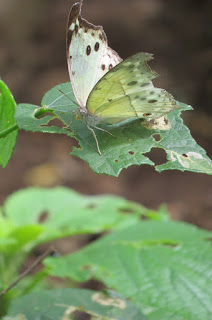
Forest Mother of Pearl

Salamis parhassus-50mm
Among Africa's loveliest and most memorable butterflies,these large insects have a wingspan of 80-95mm.The upper sides of the wings are a shining greenish-white,with oily violet reflections.The undersides are more muted
At rest,clinging to underside of foliage in the shade,they look like leaves
Habits &Habitat:Fairly common in forest and woodland habitats,
Can be very abundant seasonally,they fly with a sailing motion,often noticed in flight on sunny days,when their moving wings provide bursts of colour,
They frequently settle on the ground to mud -puddle.

Monday, 18 January 2016

Common Teal Sightings in Thika Sewage Treatment Ponds

Yesterday 17th January 2016 during the Water Bird counts organized by National Museums of Kenya,Ornithology Department and other lead agencies, we spotted  Common Teal(green-winged Teal) in one of the ponds,a small dabbling duck little larger than a Hottentot Teal,with a rather steep forehead and a short bill,


Male in breeding plumage has chestnut head with a buff -boarded iridescent green band from lores to nape:body greyish with white horizontal line along side and a creamy under tail coverts noticeable at a distance 
Habits- singles or small groups associate with other waterfowl,they feed waterside vegetation.Regular paleartic migrant in small numbers November to March mainly above 1400m on small ponds,streams and lakeshores in and west of Rift valley, including Lake Turkana
Together with Yellow-billed Ducks
In the exercise other water birds were also seen and recorded

   
White faced whistling Duck
Sacred Ibis
Photos credit  @Mwangi wa Gitau

Monday, 11 January 2016

Oryx Antelope Facts

The elegant Oryx belongs to the group one of the uncommon mammals on earth. The Oryx is so much adapted to the arid and harshly hot landscape that its ability to go on without water for a prolonged period can only be rivaled by that of the camel. Oryx is among the four antelope species of the genus Oryx. Out of the four Oryx species, three can be found in the arid regions of Africa and the fourth species is a resident of the Arabian Peninsula. Oryx has amazing long spiky horns with a neck and mane resembling that of a horse. They have a very supple muscular body structure with distinct black outlines against the white face. Their long horns are almost straight dark markings on the legs During the ritualistic display of dominance, these antelopes show their distinctive features to exhibit their long ringed horns that can reach up to 1500 mm in length.


Thursday, 17 December 2015

Travel and Wild Adventures: About Us

Travel and Wild Adventures: About Us: African Premier Adventures specialize in creating outstanding and premier safaris which focus specifically on birds, wildlife, sightseeing...

Elephants behaviours

Elephants form deep family bonds and live in tight matriarchal family groups of related females called a herd. The herd is led by the oldest and often largest female in the herd, called a matriarch. Herds consist of 8-100 individuals depending on topography and family size. When a calf is born, it's
raised and protected by the whole matriarchal herd. Males leave the family unit between the ages of 12-15 and may lead lonely lives or live temporarily with other males.
Elephants are extremely intelligent animals and have memories that span many years. It is this memory that serves matriarchs well during dry seasons when they need to guide their herds, sometimes for tens of miles, to watering holes that they remember from the past. They also display signs of grief, joy, anger, and play.
Recent research has shown that elephants can communicate over long distances by producing a sub-sonic rumble that can travel over the ground faster than sound through air. Other elephants receive the messages through the sensitive skin on their feet and trunks. It is believed that this is how potential mates and social groups communicate.


Thursday, 12 November 2015

African Premier Adventures Ltd-Bakiga/Batooro Traditional Dancers Uganda/Kibale Forest


Ugandan Bakiga/Batooro  traditional dances have
adopted the upper body and waist basics and the intricate footwork and usage of
the head to augment the dances. At many dances performances, especially social
gatherings where traditional dance is part of the entertainment the head, waist,
neck and ankles are highlighted for the dance by use of bandanas, ankle bells,
bracelets and beads. It is also a mode of beautifying the dancers

Friday, 9 October 2015

How many teeth does a Hippopotamus Have?

Adult hippopotamus have thirty six teeth including two incisors, one canine, three premolars and three molars on each half of the jaw on both sides.


Adult hippos may retain some of their milk teeth for some years after developing their adult teeth meaning some hippos can have as many as forty teeth for a few years
The largest teeth are commonly referred to as tusks. These are the canines.

The front incisors are commonly referred to as fighting tusks as they are primarily responsible for inflicting wounds during fights.

Tuesday, 8 September 2015

Birding sites within Nairobi

There are couple of places that are  close to the capital,which are productive and rewarding  in numbers of Birds species

1 Nairobi National Park- 117sqkm
Oldest Park in  Kenya over 60 years old, more than 500 Bird species have been recorded
The Park has four of the Big Five,and has its own migration, Most of the herbivores move outside the park in search of pasture during the dry season,
Roads are motorable throughtout the year and they are well sign posted
Park Entrances Charges Non Residents/Child & student USD 43/22, Residents/Child & student Ksh 1030/515 Citizens/Child & student Ksh 430/215
Gates open @ 6:30 am in the Morning
http://www.kws.go.ke/content/park-fees-and-accommodation


There are numerous stop overs along this road with the first one at Kona baridi(cold bend) ,The fun part of it, you do birding while walking as opposed to many areas where you confined into a vehicle


Gatamaiyu is part of the  larger Kereita forest, which is an extension of  southern- most end indigenous forest of the Aberdare Ranges, an ideal destination for Urban birding and hiking,Gatamaiyu is good for many afro tropical highland species,its one and half hour drive from Nairobi,

A wetland 30 minutes drive from Nairobi, a nice area for variety of Waterfowl and a localized Maccoa Duck,Its fresh water is a magnet for the water birds and other highland species such as the Malachite Sunbird, Hunters Cisticola,Ayres's Hawk Eagle,Migrant species,Spotted Crake,Ferruginous Duck,Southern Pochard,Northern Shoveler & Pintail,Garganey  have all been recorded.

                  5 Paradise Lost
Paradise Lost  was discovered in 1996 by coffee farmers in Kiambu. Paradise Lost has a beautiful scenery which oozes such beauty that the name fittingly benefits the surrounding and the nature
. The main attraction at Paradise Lost Resort in Kiambu which is a 54 acre farm is the Paradise Lost Resort caves  that are eroded by the nearby Gichi River in Kenya with their entrance screened by an impressive cascading Paradise Lost waterfall .
More than 100 species of birds may be seen on a good day. Entrance fee is at Ksh. 300 per person for adults and Ksh.250 for children.

Northern Pied Babbler
5 Karura Forest
Situated in the northern part of Nairobi city, Karura Forest is 1,041 hectares, making it one of the largest urban gazetted forests in the world. The forest holds nearly all the 605 species of Wildlife found in Nairobi, including three types of antelope.
 Karura Waterfall

The forest is home to a number different mammals including the Harvey`s Duiker, Bush Bucks, Sykes’s   & Vervet monkeys, Three horned Chameleon, Bird species includes ; Singing Cisticola African Goshawk, African Crowned Eagle, Augur Buzzard, Grey Cuckoo, Brown chested Alethe, Narina Trogon, Long Crested Eagle, White backed Duck, Malachite Kingfisher, Hartlaub’s Turaco, White headed Barbet, Slender billed Greenbul, African Black Duck, African Emerald Cuckoo, Yellow rumped Tinkerbird, Paradise Flycatcher, 
                                                    African Harrier Hawk
Ngong Forest Sanctuary is one of only very few forests in the world that exists within a city. Only 6 kilometers from Nairobi's central business district, the forest is a precious resource for Kenya's capital city.
The birds of Ngong Forest Sanctuary include bird’s characteristic of the indigenous dry evergreen forest of Nairobi, birds of the surrounding grasslands and gardens, and water birds  
African, Grey ,Mountain & Yellow Wagtail ,Grassland & Tree Pipits, Yellow-throated Longclaws Slender-billed Greenbul ,Cabanis’s  & Yellow-bellied Greenbul ,Common Bulbul ,White-starred Robin ,Cape & Ruppell’s Robin-Chats ,Brown-backed Scrub Robin, Common Stonechat ,Northern &Pied Wheatear ,Olive Thrush, Yellow-whiskered Greenbul, Crimson rumped Waxbill, African Fish Eagle, White headed Barbet, Grosbeak Weaver, Singing Cisticola, Augur Buzzard, African Citril

                                                               African Goshawk

Located along Langata road, 15 minutes drive from the city center, is Uhuru Gardens, Kenya’s largest Memorial Park.
Uhuru is a swahili word meaning freedom.The gardens were officially declared a National Monument in 1966 because of their historical importance.
Of importance to note is that it is Kenya’s birthplace. This is where the first Kenyan flag was first raised and thus marking the very first year of independence on the 12th December 1963.Within the garden are two monuments commemorating Kenya’s independence, and a Mugumo (fig) tree.

                                           The Fig tree ( Mugumo)

Uhuru Gardens is close to Nairobi National park ,birds normally come to feed on the garden from it more than 100 species have been recorded here


Thursday, 23 July 2015

Fourteen Falls Kenya- Ol Donyo Sabuk National Park


Fourteen falls is the name given to this 14 successive falls
of water on the Athi River in Thika, The falls are located about 70 kilometers
from Nairobi off the Thika  Garrisa
highway